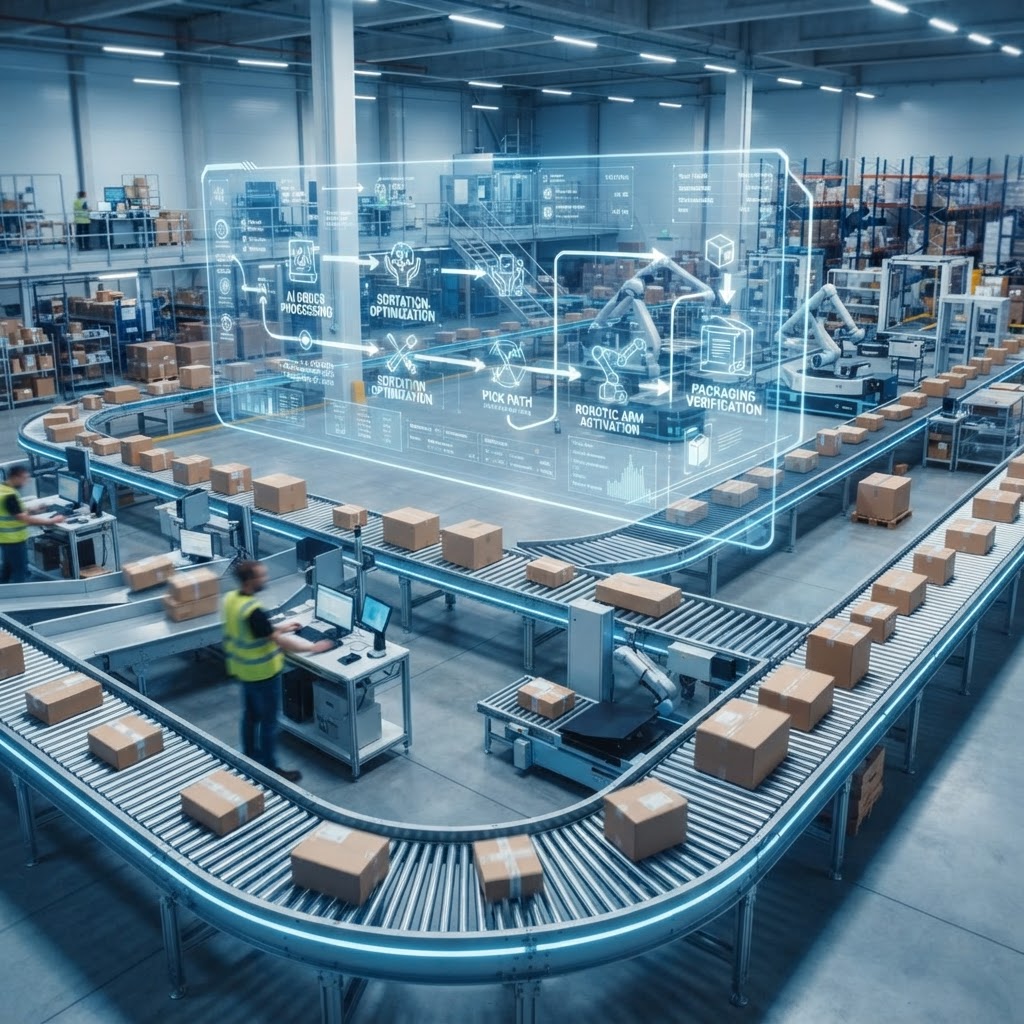
The dream of a hands-off online business — where products sell, orders fulfill, and marketing runs on autopilot — is no longer science fiction. In 2026, AI and automation tools have made it possible to run a profitable dropshipping store with just 2-5 hours of weekly oversight. This guide shows you exactly how to automate every part of your dropshipping business, from order fulfillment to content creation to marketing, so you can build a store that generates revenue while you sleep. Whether you're starting fresh or looking to automate an existing store, Ritsbo's AI platform provides the tools to make it happen.
What Is Dropshipping Automation?
Dropshipping automation is the use of AI and software to handle the repetitive, time-consuming tasks of running a dropshipping store — without requiring your daily manual involvement. Instead of processing orders one by one, writing product descriptions by hand, posting to social media every day, and sending individual emails to customers, automation tools handle these tasks automatically based on rules and triggers you set up once.
The goal isn't to eliminate human involvement entirely — it's to eliminate the busywork so you can focus on the high-value decisions that actually grow your business: which products to add, which audiences to target, how much to spend on ads, and how to position your brand. A well-automated store runs 80-90% on autopilot, requiring only 2-5 hours per week of strategic oversight.
In 2026, AI has taken automation to a new level. Instead of just automating mechanical tasks (like forwarding orders to suppliers), AI can now generate content, write marketing copy, optimize pricing, and even make product recommendations. This means the 10-20% of work that used to require human creativity is increasingly being handled by AI as well.
Why Automation Matters More Than Ever in 2026
The e-commerce landscape in 2026 is more competitive than ever. Customers expect fast shipping, professional stores, responsive customer service, and consistent content across channels. Meeting these expectations manually requires either a large team or working 60+ hour weeks. Automation lets a single entrepreneur deliver an experience that rivals a team of five.
Here's why automation is no longer optional:
- Customer expectations have risen: Customers expect instant order confirmations, tracking updates, and responsive communication. Automation handles this 24/7.
- Content demands have multiplied: You need blog posts, social media content, email campaigns, and product descriptions — all consistently. AI generates all of this automatically.
- Multi-channel complexity: Selling on your store, Amazon, TikTok, and Google simultaneously requires syncing inventory and product data across platforms. Automation handles this in real time.
- Competition is fierce: Stores that automate can launch faster, test more products, and respond to trends quicker than stores that operate manually.
- Time is your scarcest resource: As a solo entrepreneur, your time is the bottleneck. Automation removes that bottleneck.
What You Can Automate in Your Dropshipping Store
Let's break down every part of a dropshipping store and see what can — and can't — be automated in 2026.
1. Order Fulfillment Automation
Order fulfillment is the most straightforward part to automate. When a customer places an order, the entire fulfillment process can run without your involvement:
- Order routing: The platform automatically sends order details (product, quantity, shipping address) to your supplier.
- Payment processing: Stripe automatically processes the customer's payment and deposits your profit margin.
- Tracking updates: When the supplier ships the product, the tracking number is automatically added to the order and emailed to the customer.
- Order status updates: The customer receives automated emails at each stage: order confirmed, order shipped, order delivered.
- Inventory sync: When a product sells out at the supplier, your store automatically marks it as out of stock to prevent overselling.
With a platform like Ritsbo, this entire flow is built in. You don't need to install apps or configure webhooks — it works out of the box. The only manual step is reviewing orders occasionally to ensure everything is running smoothly.
2. Product Description Automation
Writing product descriptions is one of the most time-consuming parts of running an online store. A catalog of 50 products needs 50 unique, persuasive, SEO-optimized descriptions — which takes days to write manually. AI handles this in seconds.
AI-generated product descriptions are:
- Persuasive: Written in a benefit-led, second-person voice that speaks directly to the buyer
- SEO-optimized: Include relevant keywords naturally, with proper meta titles and descriptions
- Consistent: Every description follows the same structure and tone, creating a cohesive brand voice
- Original: No supplier boilerplate or generic marketplace copy — each description is unique
- Scalable: Whether you have 10 products or 1,000, the AI generates descriptions for all of them in the same amount of time
The AI also generates short descriptions, meta descriptions, and image alt text — all the SEO elements that would take hours to write manually. This means your products are ready to sell and rank in Google from the moment they're added to your store.
3. SEO Content Automation
SEO is a long-term traffic strategy that requires consistent content creation. The problem is that writing 2-3 blog articles per week is a full-time job. AI blog writers solve this by generating SEO-optimized articles automatically.
Here's how AI SEO automation works:
- Keyword research: The AI identifies long-tail keywords in your niche that have search volume but manageable competition.
- Article generation: The AI writes 2,000-5,000 word articles targeting those keywords, with proper heading structure, internal links, and SEO metadata.
- Publishing schedule: Articles are scheduled and published automatically, maintaining a consistent content cadence.
- Internal linking: The AI automatically links blog posts to relevant product pages, improving your site's SEO structure.
- Social distribution: When a blog post is published, the AI automatically generates social media posts promoting it and schedules them across platforms.
The result is a content engine that runs continuously, driving organic traffic to your store without any manual writing. Stores that use AI blog writers typically see organic traffic growth within 3-6 months, compounding over time.
4. Email Marketing Automation
Email marketing has the highest ROI of any marketing channel — $36 for every $1 spent. But it requires consistent effort: writing campaigns, segmenting audiences, and timing sends. AI email automation handles all of this.
Automated Email Flows
- Welcome series: When a customer makes their first purchase, they receive a series of welcome emails introducing your brand, offering care tips, and suggesting related products.
- Abandoned cart recovery: When a customer adds items to their cart but doesn't check out, they receive automated reminder emails with their cart contents and a gentle push to complete the purchase.
- Post-purchase follow-up: After a customer receives their product, they get automated emails asking for reviews, offering related products, and providing reorder reminders.
- Win-back campaigns: Customers who haven't purchased in 60+ days receive automated re-engagement emails with special offers.
- Newsletter: A weekly or biweekly newsletter featuring new products, blog content, and promotions — generated and sent automatically.
The AI generates the email copy, designs the templates, segments the audience, and schedules the sends. You set the strategy (which flows to enable, what offers to include) and the AI executes.
5. Social Media Automation
Maintaining an active social media presence across Instagram, TikTok, Facebook, and Pinterest is essential for e-commerce, but it's also one of the most time-consuming marketing tasks. AI social media automation handles content creation and scheduling.
- Content generation: The AI creates social media posts from your product catalog and blog content — product highlights, lifestyle shots, tips, and promotions.
- Platform optimization: Each post is formatted for the specific platform (square images for Instagram, vertical for TikTok, link cards for Facebook).
- Scheduling: Posts are scheduled at optimal times based on when your audience is most active.
- Hashtag optimization: The AI selects relevant hashtags for each post to maximize reach.
- Cross-posting: Content is automatically adapted and posted across all your social platforms simultaneously.
Instead of spending 2 hours per day on social media, you spend 30 minutes per week reviewing and approving the AI's content plan. The AI handles the creation and scheduling; you handle the brand oversight.
6. Pricing and Margin Automation
Pricing is one of the most impactful levers in e-commerce — too high and you lose sales, too low and you lose margin. AI pricing automation ensures every product is priced optimally.
- Margin enforcement: The AI ensures every product maintains at least a 30% profit margin, automatically adjusting prices when supplier costs change.
- Competitor monitoring: The AI tracks competitor prices and suggests adjustments to stay competitive without racing to the bottom.
- Dynamic pricing: Prices can automatically increase during high-demand periods and decrease during slow periods to maximize revenue.
- Sale scheduling: The AI can automatically schedule and promote sales (holiday, seasonal, clearance) without manual setup.
With automated pricing, you never have to worry about a product selling at a loss or a margin eroding because supplier costs changed. The AI monitors and adjusts continuously.
7. Customer Service Automation
Customer service is the one area where full automation is risky — customers want to feel heard by a real person. But AI can handle the initial response and common questions, freeing you to focus on complex issues.
- AI chatbot: Handles common questions (shipping times, return policy, order status) instantly, 24/7.
- Automated order updates: Customers receive automatic emails at each stage of their order (confirmed, shipped, delivered).
- FAQ automation: An AI-powered FAQ page answers common questions before customers need to contact you.
- Review requests: Automated emails request product reviews after delivery, building social proof.
For complex issues (damaged products, refund requests, custom orders), the AI escalates to you with all the context already gathered. You handle the human side; the AI handles the routine.
8. Inventory and Catalog Automation
Managing inventory across multiple suppliers and sales channels is a logistical challenge. Automation keeps everything in sync.
- Stock syncing: When a product sells out at the supplier, your store automatically marks it as out of stock.
- Multi-channel sync: Inventory levels sync across your store, Amazon, TikTok Shop, and Google Shopping simultaneously.
- Product discovery: The AI identifies trending products in your niche and suggests additions to your catalog.
- Dead product removal: The AI flags products that haven't sold in 90 days and suggests removing them.
- Catalog feed generation: Product feeds for Google Shopping, Facebook catalogs, and Amazon are generated and updated automatically.
What You Cannot Automate (And Shouldn't Try)
While 80-90% of a dropshipping store can be automated, some tasks require human judgment and creativity:
- Brand strategy: Deciding your brand positioning, target audience, and unique value proposition requires human insight.
- Product selection strategy: The AI suggests products, but you decide which align with your brand vision.
- Ad budget allocation: Deciding how much to spend and which audiences to target requires strategic judgment.
- Complex customer service: Sensitive issues (refunds, complaints, custom requests) need a human touch.
- Partnership decisions: Choosing influencers, affiliates, or suppliers to work with requires relationship-building.
- Creative direction: The AI generates content, but you guide the overall creative direction and brand voice.
The goal of automation isn't to replace yourself — it's to free yourself from the repetitive work so you can focus on these high-value decisions. A store that's 90% automated still needs an owner who spends 2-5 hours per week on strategy. The difference is that those 2-5 hours are spent on growth, not on busywork.
Building an Automated Dropshipping Store: Step by Step
Step 1: Choose an All-in-One AI Platform
The most efficient way to build an automated store is to use an all-in-one platform that includes all the automation tools in one subscription. Piecing together individual tools (Shopify + Klaviyo + Buffer + SEO app + Oberlo) costs more and requires managing multiple platforms. An all-in-one AI platform like Ritsbo includes store building, product descriptions, SEO content, email marketing, social media automation, and order fulfillment in one subscription.
Step 2: Generate Your Store with AI
Provide your niche and business name, and the AI generates a complete store — design, products, descriptions, SEO metadata, and legal pages — in under 60 seconds. This gives you a fully functional foundation to build on.
Step 3: Set Up Automation Flows
Once your store is generated, enable the automation flows:
- Turn on the AI blog writer (2-3 articles per week)
- Enable email automation (welcome series, abandoned cart, post-purchase)
- Connect social media accounts and enable automated posting
- Enable pricing automation (margin enforcement, competitor monitoring)
- Set up the AI chatbot for customer service
- Enable multi-channel sync (Amazon, TikTok, Google Shopping)
Step 4: Connect Payment Processing
Connect Stripe to accept payments. The platform handles order processing, profit calculation, and payout scheduling automatically.
Step 5: Launch and Monitor
Publish your store, connect your domain, install analytics pixels, and start driving traffic. From here, your weekly routine is:
- Monday (30 min): Review weekly analytics — traffic, sales, conversion rate, top products
- Wednesday (30 min): Review AI-generated content (blog posts, social media, emails) and approve or adjust
- Friday (30 min): Check ad performance, adjust budgets, plan next week's promotions
- As needed: Handle customer service escalations, add new products, make strategic decisions
Automation Tools: All-in-One vs. Pieced Together
| Feature | All-in-One AI Platform (Ritsbo) | DIY Stack (Shopify + Apps) |
|---|---|---|
| Store builder | AI-generated, complete store in 60 seconds | Manual theme setup, 20-40 hours |
| Product descriptions | AI-generated, included | Manual writing or $50-$200/article freelancer |
| SEO content | AI blog writer, included | Manual writing or $100-$500/article freelancer |
| Email marketing | AI-generated campaigns, included | Klaviyo: $20-$100+/month |
| Social media | AI-generated and scheduled, included | Buffer/Hootsuite: $15-$50/month |
| SEO optimization | Automatic, included | SEO app: $20-$50/month |
| Order fulfillment | Automatic, included | Oberlo/DSers: $0-$30/month |
| Pricing automation | AI-driven, included | Pricing app: $20-$50/month |
| Reviews | Automated requests, included | Yotpo/Judge.me: $15-$50/month |
| Total monthly cost | $59-$100 | $89-$400+ |
| Setup time | 1-2 hours | 20-40 hours |
Measuring Automation Success: Key Metrics
How do you know if your automation is working? Track these key metrics:
- Time spent per week: A well-automated store should require 2-5 hours/week. If you're spending more, identify what's still manual and automate it.
- Order fulfillment time: Orders should be routed to suppliers automatically within minutes. If you're manually processing orders, your fulfillment automation isn't working.
- Content output: Your AI should be producing 2-3 blog posts per week and daily social media posts. If content output drops, check your automation settings.
- Email engagement: Automated email flows should maintain open rates above 20% and click rates above 2%. If rates drop, the AI content may need adjustment.
- Revenue per hour: Track your monthly revenue divided by hours spent. A well-automated store should generate $100-$500+ per hour of your time.
Common Automation Mistakes to Avoid
- Automating everything at once: Start with the highest-impact automations (fulfillment, descriptions, email) and add more gradually. Automating everything at once makes it hard to identify what's working.
- Not reviewing AI content: AI-generated content is good but not perfect. Spend 30 minutes per week reviewing blog posts, emails, and social media to ensure quality.
- Ignoring customer feedback: Automation can create a disconnect from your customers. Read reviews, respond to messages, and use feedback to improve your automation settings.
- Over-automating customer service: Some customers need a human. Don't let your AI chatbot handle complex or sensitive issues — escalate them.
- Not monitoring margins: Even with pricing automation, check your margins monthly. Supplier costs can change, and you need to ensure profitability.
- Setting and forgetting: Automation isn't "set it and forget it." Spend 2-5 hours per week on strategic oversight. The automation handles execution; you handle direction.
The Future of Dropshipping Automation
Automation is only going to get more sophisticated. In the near future, we'll see:
- Predictive product sourcing: AI that identifies trending products before they peak, automatically adding them to your store.
- Personalized storefronts: AI that customizes the shopping experience for each visitor based on their browsing behavior and purchase history.
- Automated video creation: AI that generates product demo videos and TikTok content from your product images and descriptions.
- Voice commerce: Customers ordering through voice assistants, with AI handling the entire transaction.
- Autonomous ad management: AI that creates, tests, and optimizes ad campaigns without human input, adjusting budgets based on performance.
The entrepreneurs who adopt automation now will be best positioned to take advantage of these advances. By the time these features arrive, you'll already have an automated foundation to build on.
Conclusion: Start Automating Your Store Today
Dropshipping automation in 2026 is not a luxury — it's a necessity. The platforms, tools, and AI capabilities exist today to run a profitable online store with 2-5 hours of weekly involvement. The question isn't whether you should automate, but how quickly you can get started.
The most efficient path is an all-in-one AI platform that includes everything you need in one subscription: store building, product descriptions, SEO content, email marketing, social media, and order fulfillment. No app subscriptions, no integration headaches, no 40-hour setup weeks.
Ready to build an automated dropshipping store? Start your free trial with Ritsbo and watch the AI build a complete, automated store for you in under 60 seconds. Or explore our pricing plans to find the automation package that fits your goals. The sooner you automate, the sooner you can focus on what matters: growing your business.